
Browse industrial gaskets by type
Compare flange and equipment gaskets by construction, material and joint geometry. The range includes spiral wound, RTJ, kammprofile, jacketed, graphite, PTFE, fiber and rubber gaskets. Industrial gaskets seal between stationary mating surfaces. The joint design determines the gasket geometry and available seating load; the process fluid and operating conditions determine which materials can be considered. A gasket that fits the bolt pattern is not necessarily an equivalent replacement. Use the product cards below to compare constructions and open the detail page for ordering requirements.
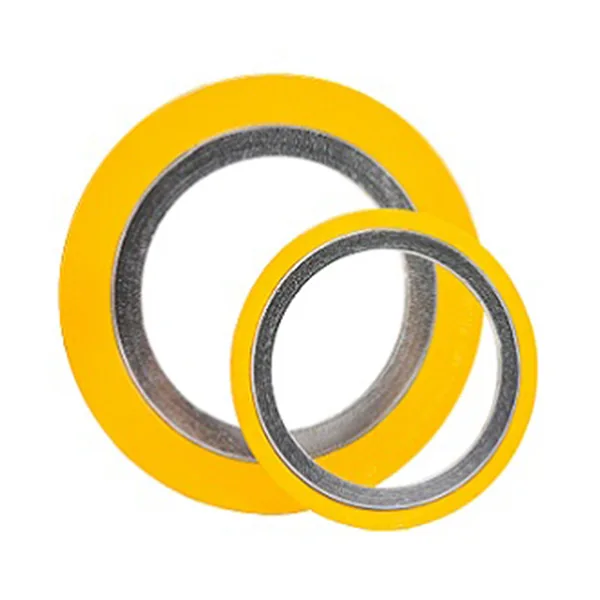
Metallic & Semi-metallic Gaskets ↗
Choose by flange geometry and sealing-element construction. Spiral wound, kammprofile, jacketed and corrugated constructions differ from solid-metal ring joints and copper gaskets. Specify the flange facing and seating dimensions before comparing materials.
Browse products →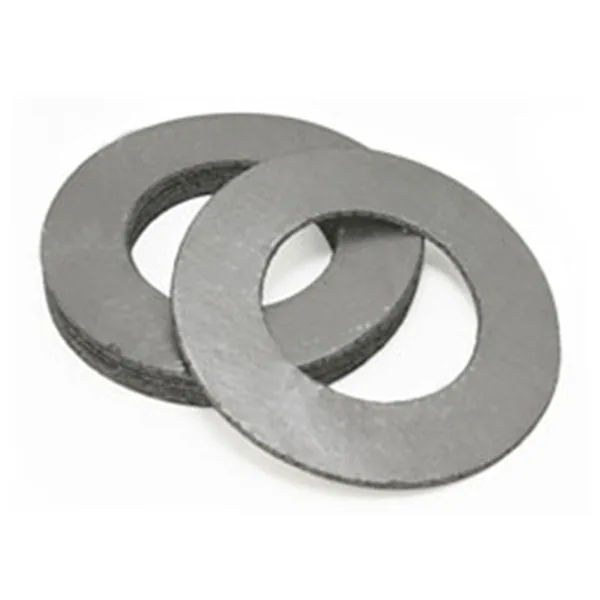
Non-metallic Gaskets ↗
Compare graphite, PTFE, compressed-fiber, rubber and ceramic-fiber gaskets by the actual joint duty. A material name alone does not establish chemical compatibility or acceptable flange loading. Identify the material grade, thickness and cut geometry together.
Browse products →Compare the available constructions
| Your requirement | Product direction | What to check |
|---|---|---|
| Raised-face flange with a spiral wound specification | Spiral wound gasket | Confirm inner/outer rings, winding alloy and filler. |
| Machined RTJ flange groove | Ring joint gasket | Use the ring number, profile and metal requirement. |
| Serrated metal-core construction | Kammprofile gasket | Identify core, facing and centering arrangement. |
| Exchanger with partition bars | Jacketed or drawing-based gasket | Include the complete partition layout. |
| Cut sheet or elastomer gasket | PTFE, graphite, fiber or rubber | Identify compound or grade, reinforcement and thickness. |
Material, size & inspection requirements
Industrial gaskets seal between stationary mating surfaces. The joint design determines the gasket geometry and available seating load; the process fluid and operating conditions determine which materials can be considered. A gasket that fits the bolt pattern is not necessarily an equivalent replacement.
Keep dimensions, units, material grades and any required test conditions together on the order. If a product is a replacement, include its designation or drawing instead of relying on a photograph alone.
Custom orders & bulk supply
Kaxite reviews drawings, mixed-size lists and fabrication-material inquiries. Specify quantities, packaging, destination and required date. Sample availability, minimum order, inspection records and commercial terms are confirmed for each line; no category-wide stock or certification claim is implied.
Discuss your order ↗Purchasing questions
How do I choose the right industrial gaskets?
Start with the equipment, drawing and material specification. Compare the product forms in the selection table and retain the constraints that apply to the actual joint or process.
Can one inquiry include several materials or sizes?
Yes. List each material, size and quantity on its own line. Any item-specific minimum or processing requirement is identified in the quotation.
What are the minimum quantity and lead time?
They depend on the product, grade, dimensions and quantity. Send the required delivery date; the quotation states the production and shipping scope rather than applying one promise to the whole category.
Can you review drawings and documentation requirements?
Send the drawing revision with critical dimensions and required records. Customization, inspection scope and document availability are confirmed for the selected item before ordering.